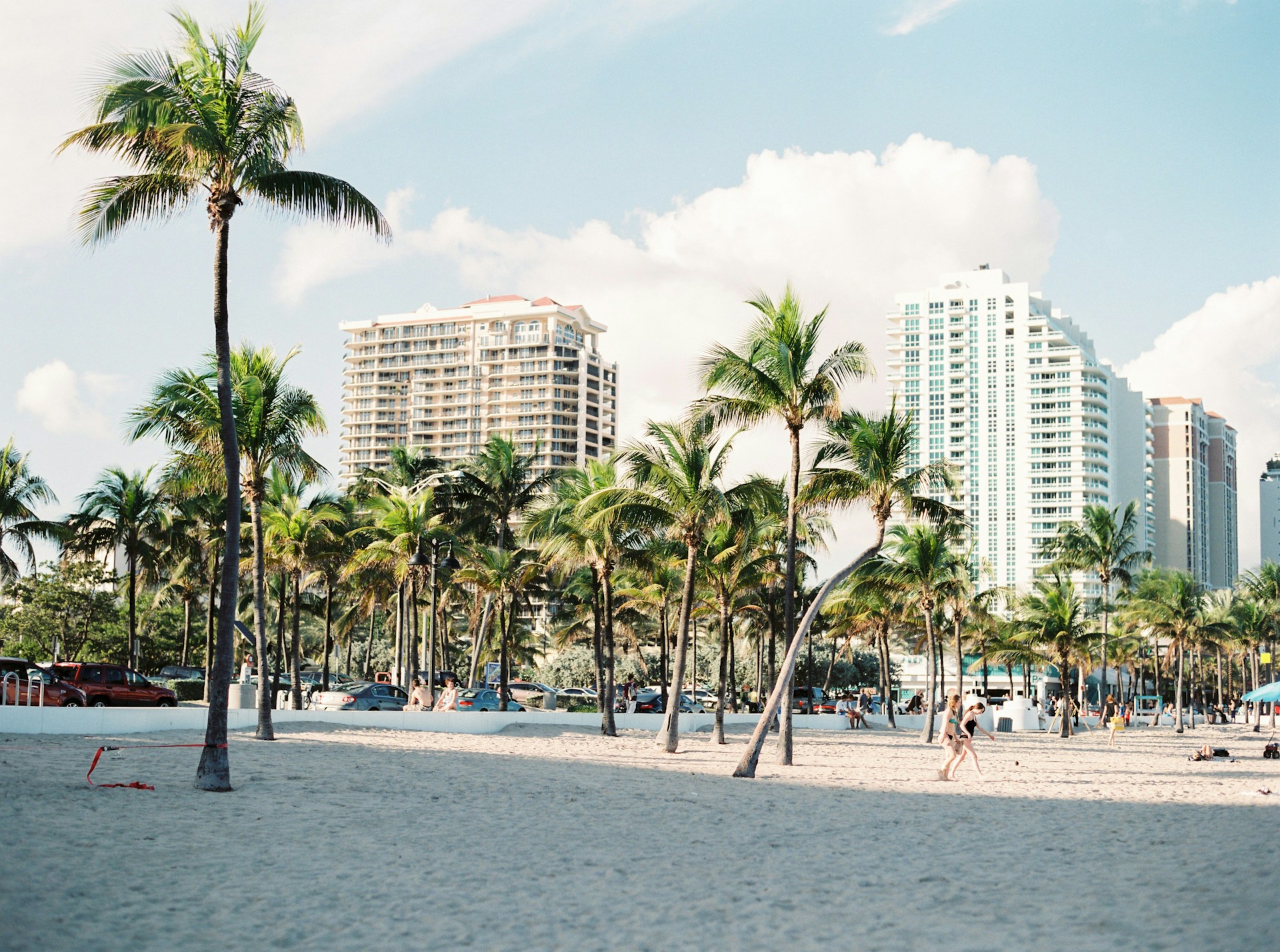
Miami-Dade County is the most complex commercial real estate market in South Florida — spanning everything from the globally competitive Brickell financial corridor to the industrial powerhouse of Doral, from the design-forward Wynwood creative district to the sprawling suburban office parks of Kendall and Doral. Getting it right as a tenant requires submarket-level intelligence, not just county-level generalities.
This guide covers Miami-Dade's major commercial submarkets as of early 2026 — current rates, tenant dynamics, and how to approach negotiations in each.
Miami-Dade's Commercial Market in Context
Miami-Dade experienced one of the most dramatic commercial real estate surges in the country between 2020 and 2023, driven by financial services migration, international capital inflows, population growth, and a technology and startup ecosystem that didn't previously exist at scale. That surge has moderated in 2024–2025, but the market remains fundamentally different than it was five years ago — with pricing, vacancy dynamics, and landlord posture that reflect a permanently elevated base.
For tenants, the practical implication is that Miami-Dade's top-tier submarkets — Brickell, Coconut Grove, and parts of downtown Miami — remain landlord-favorable for premier product. Secondary and suburban submarkets offer more negotiating room, particularly for office space where remote work has sustained elevated vacancy in certain building classes.
Key Submarkets
Brickell
Brickell is Miami's financial district and the highest-priced commercial submarket in South Florida. Class A office here competes with any major U.S. financial center for both quality and price. The submarket attracted significant financial services tenants from New York and internationally, filling new and existing Class A inventory and keeping effective rents elevated. Brickell is the right market for tenants where the address is part of the product — law firms, financial advisors, hedge fund managers — and where occupancy cost is secondary to perception.
Downtown Miami / Wynwood / Edgewater
Downtown Miami proper has more vacancy than Brickell, offering opportunity for tenants who want a Miami address at below-Brickell pricing. Wynwood and Edgewater attract creative, technology, and media tenants drawn to the neighborhood's brand identity and walkability. Rents here are demand-driven by tenant type — the right business in Wynwood pays a premium for the address; a generic office user may find better value elsewhere.
Coral Gables
Coral Gables is Miami-Dade's most established suburban office market — professional, polished, and consistently in demand from law firms, healthcare companies, and professional services businesses. The Miracle Mile retail corridor and Giralda Avenue pedestrian zone are among Miami-Dade's most durable retail locations. Class A office in Coral Gables commands rates close to Brickell for the right building, with lower Class B product offering real value.
Doral
Doral is simultaneously one of Miami-Dade's largest office markets and its dominant industrial submarket. Airport proximity and foreign trade zone access make it a hub for international trade, logistics, and import-export businesses. The office market here serves a more corporate and suburban profile than Brickell or Coral Gables. Industrial Doral is one of the tightest markets in South Florida — supply is constrained and demand from logistics, freight, and distribution users remains strong.
Aventura / North Miami Beach
The northern Miami-Dade corridor — spanning Aventura to North Miami Beach — is one of the most interesting office markets in the county for cost-conscious tenants. Quality Class B product is available at rates 20–30% below Brickell with comparable accessibility. The submarket benefits from proximity to both Broward and Miami-Dade talent pools and serves businesses that need a Miami address without Brickell pricing.
Kendall / South Miami-Dade
The Kendall corridor offers the county's most affordable office and retail rates, serving businesses whose customer base is concentrated in Miami-Dade's southern and western communities. Medical, dental, and professional services tenants with local client bases find strong options here at price points unavailable closer to downtown.
Miami-Dade Office Rates (2026)
| Submarket / Product | Base Rent ($/SF/yr) | Est. NNN ($/SF/yr) |
|---|---|---|
| Brickell — Class A | $65 – $95+ | $15 – $20 |
| Brickell — Class B | $48 – $65 | $13 – $17 |
| Coral Gables — Class A | $52 – $72 | $13 – $17 |
| Coral Gables — Class B | $38 – $54 | $11 – $15 |
| Downtown Miami — Class A/B | $42 – $62 | $12 – $16 |
| Wynwood / Edgewater | $45 – $68 | $12 – $16 |
| Doral — Class A/B | $36 – $52 | $11 – $14 |
| Aventura / N. Miami Beach | $34 – $50 | $11 – $14 |
| Kendall / South Miami-Dade | $28 – $44 | $9 – $13 |
Brickell Class A market reality: The very top of the Brickell market — trophy buildings with water views and full-service amenities — has set new pricing benchmarks for South Florida. These are not comparable to the rest of the market. For most tenants, even those who need a Brickell address, the achievable range is $65–$80/SF for well-located Class A product.
Miami-Dade Retail Rates (2026)
| Location Type | Base Rent ($/SF/yr) | Notes |
|---|---|---|
| Design District / Wynwood flagship | $100 – $200+ | Luxury/experiential retail |
| Lincoln Road, Miami Beach | $90 – $160+ | High tourist traffic |
| Miracle Mile, Coral Gables | $55 – $90 | Strong local and tourist draw |
| Dadeland / Kendall power center | $35 – $60 | High-volume suburban retail |
| Doral shopping centers | $30 – $50 | Dense residential base |
| Neighborhood centers, county-wide | $22 – $42 | Wide range by location and anchor |
Miami-Dade Industrial Rates (2026)
| Submarket | Base Rent ($/SF/yr) | Notes |
|---|---|---|
| Doral — Class A logistics | $22 – $34 | FTZ proximity premium |
| Doral — Class B warehouse | $18 – $28 | Tight vacancy, limited options |
| Hialeah / Medley | $16 – $26 | Good access, lower prestige |
| South Miami-Dade | $14 – $22 | Lower demand, lower cost |
| Opa-locka / NW Miami-Dade | $15 – $24 | Airport adjacent submarket |
Negotiating in Miami-Dade: What's Different
Miami-Dade's market has some characteristics that differ from Broward and Palm Beach:
International Landlord Base
A significant portion of Miami-Dade commercial real estate is owned by international investors — particularly in Brickell, downtown Miami, and major retail corridors. These owners sometimes operate differently from domestic institutional landlords: decision-making can be slower, approval chains more complex, and responses to proposals less predictable. Building a relationship with the local leasing team (rather than relying on the ownership structure) is often critical.
Higher Baseline Occupancy Costs
Miami-Dade property taxes, insurance, and operating expenses are generally higher than comparable Broward or Palm Beach product. Budget for NNN charges at the higher end of the range provided above, particularly for buildings that have traded at elevated valuations in recent years.
More Submarket Variation
The gap between Miami-Dade's top and bottom commercial submarkets is wider than in Broward or Palm Beach. A business choosing between Brickell and Kendall is looking at rates that differ by 100% or more. Submarket selection in Miami-Dade is a larger financial decision than in most other South Florida markets.
If you are considering commercial space anywhere in Miami-Dade — whether Brickell office, Doral industrial, Coral Gables retail, or anything in between — a free consultation will give you submarket-specific guidance before you commit to a search area or speak to a landlord.